

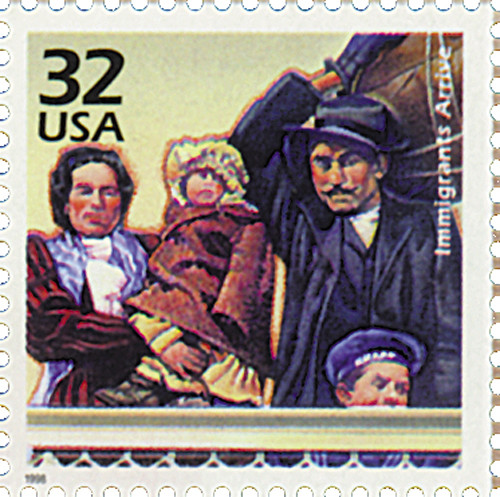
May 26, 1924: Coolidge's Bold Move - The Immigration Act That Shaped a Nation!
The Immigration Act of 1924, also known as the Johnson–Reed Act or National Origins Act, was a significant piece of legislation in the United States that fundamentally altered immigration policy. Enacted on May 26, 1924, the act was a response to growing public and political concerns regarding immigration and the demographic changes in the U.S. during the early 20th century.
This law aimed to drastically reduce immigration from certain regions, particularly targeting Asian immigrants by instituting a complete ban. It also set strict quotas for immigrants from Eastern and Southern Europe, allowing only a limited number to enter the country. The total annual immigration quota was capped at 165,000, representing an 80% reduction compared to the average annual immigration statistics prior to 1914.
One of the key features of the Immigration Act of 1924 was the introduction of a consular control system. This system mandated that immigrants must obtain visas from U.S. consulates abroad before being allowed entry into the United States. Furthermore, the act led to the establishment of the first formal border control service in the country, the U.S. Border Patrol, which was tasked with enforcing these new immigration laws.
The quotas established by the act were defined based on the population statistics from the 1890 census, which significantly favored immigrants from Northern and Western European countries, while limiting those from Southern and Eastern Europe. The legislation initially reduced the immigration quota for any nationality from 3% of their 1910 population to just 2% of the population as recorded in the 1890 census. This quota system was later revised in 1927, basing it on the 1920 census instead.
The stated purpose of the Immigration Act of 1924, as outlined by the Department of State, was to "preserve the ideal of U.S. homogeneity." This reflects the prevailing attitudes of the time, which sought to maintain a certain demographic makeup in the country. The 1924 act effectively defined U.S. immigration policy for nearly three decades and remained in place until the Immigration and Nationality Act of 1952 introduced significant revisions, with further changes culminating in the Immigration and Nationality Act of 1965.
For stamp collectors and history enthusiasts, the Immigration Act of 1924 represents a pivotal moment in U.S. immigration history, as it marked a shift in policy that would affect millions and shape the nation’s cultural landscape for generations. Understanding this act is crucial for grasping the complexities of U.S. immigration and the historical context surrounding it.
For further details about the Immigration Act of 1924, you can visit this website.