

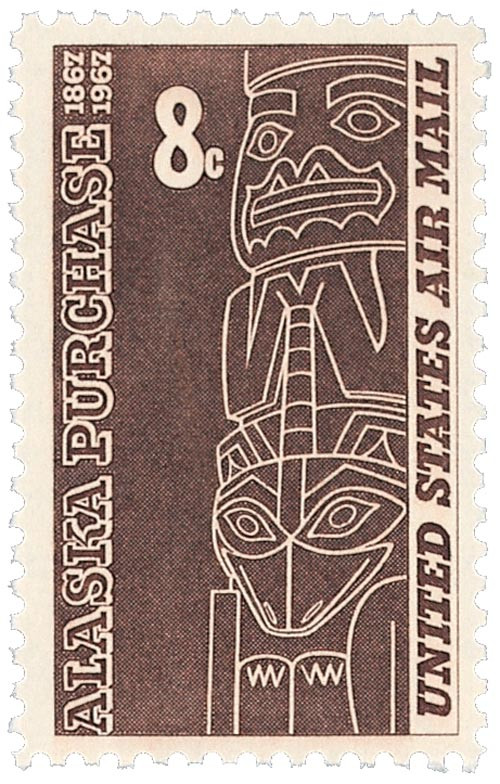
The Alaska Purchase: A Key Moment for Stamp Collectors
The Alaska Purchase represents a significant event in American history, which has implications beyond politics and economics, extending into the world of philately. On March 30, 1867, the United States finalized its acquisition of Alaska from the Russian Empire for $7.2 million, or approximately $132 million in 2024 dollars. This transaction added a vast land area of 586,412 square miles to the United States, at a bargain rate of about two cents per acre.
Historically, Russia had established a colonial presence in the northern western regions of North America, yet their settlement was minimal. After the Crimean War, Tsar Alexander II sought to divest from territories that were challenging to defend, particularly from potential threats posed by the British Empire. This led to negotiations between U.S. Secretary of State William H. Seward and Russian diplomat Eduard de Stoeckl, culminating in the treaty sign-off that confirmed American sovereignty over Alaska on October 18 of the same year.
For philatelists, interested in stamp collecting, the implications of the Alaska Purchase are critical. The acquisition spurred interest in postal services in the new territories, leading to the issuance of the first Alaskan stamps in the 1880s. These early stamps are collectibles that represent a significant chapter in American postal history, showcasing not only the geographical enlargement of the nation but also the evolution of its postal system.
Public reaction to the purchase varied significantly. While many Americans viewed the new territory favorably, anticipating its potential as a strategic trade route with Asia, critics derided the acquisition as "Seward's Folly." This skepticism stemmed from the perception that the land was barren and devoid of value, a misconception that would later be challenged by the discovery of gold during the Klondike Gold Rush in 1896.
As Alaska transitioned from a Russian colony to an American territory, many Russian settlers departed. The region remained sparsely populated until the gold rush dramatically increased immigration and interest. Moreover, the administrative evolution of Alaska from the Department of Alaska to its recognition as a state in 1959 parallels the development of its postal services, making it a fascinating study for collectors.
In conclusion, the Alaska Purchase is not only a pivotal moment in U.S. history but also serves as a significant event for postage stamp collectors. The stamps from this era encapsulate the narrative of a growing nation, its territorial ambitions, and the nuances of its identity. Enthusiasts of philately will find that stamps from the Alaskan region offer a glimpse into both its physical and historical transition from a barren land to a vital part of the American tapestry.