

July 21, 2011: A Stellar Farewell to NASA's Space Shuttle Era!
The retirement of the Space Shuttle program was officially announced in January 2004 by President George W. Bush, marking the beginning of the end for this iconic spacecraft. The announcement came as part of the Vision for Space Exploration, which aimed to conclude Shuttle operations after the completion of the International Space Station (ISS).
In March 2006, the ISS partners identified a need for 16 final assembly missions to ensure the station's proper construction. Additionally, in October 2006, one last servicing mission for the Hubble Space Telescope was approved. Initially, STS-134 was slated to be the final mission, but the tragic Columbia disaster necessitated preparations for a potential rescue mission, leading to the decision to fly STS-135 as the ultimate mission.
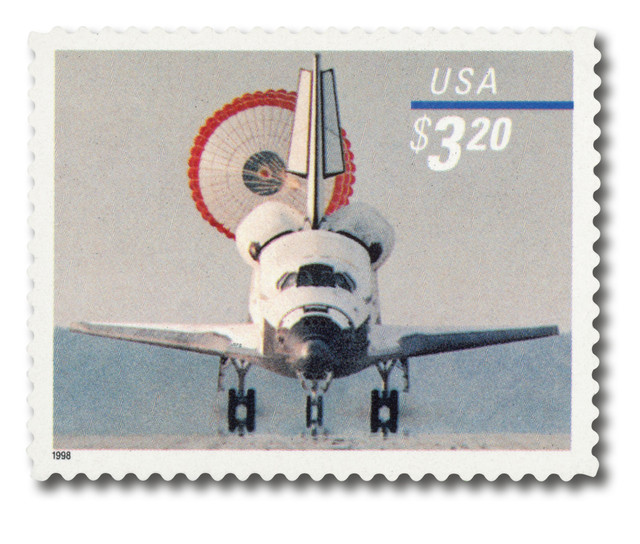
STS-135 launched on July 8, 2011, and successfully landed on July 21, 2011, at Kennedy Space Center (KSC), marking the end of an era. Following the Shuttle's retirement, NASA relied on Russian Soyuz spacecraft to transport astronauts until the launch of Crew Dragon Demo-2 in May 2020.
Each Space Shuttle orbiter was processed post-flight to ensure safety for display, primarily due to the toxic propellants in their systems. Notable display locations include Atlantis at the Kennedy Space Center Visitor Complex, Discovery at the Steven F. Udvar-Hazy Center, Endeavour at the California Science Center, and Enterprise at the Intrepid Museum in New York. Various components were repurposed for use by the U.S. Air Force, the ISS program, and governments in Russia and Canada. The Shuttle's engines were also salvaged for future use in the Space Launch System (SLS).
The legacy of the Space Shuttle continues with the Artemis program, where many components from the Shuttle are being reused. For instance, Artemis missions are utilizing previously flown Shuttle main engines and solid rocket boosters, some dating back to the early 1980s. This recycling of technology not only honors the Shuttle's legacy but also underscores the commitment to sustainable space exploration. For example, Artemis I incorporated components that had flown on 83 of the Shuttle's 135 missions, demonstrating the enduring impact of the Shuttle program.
As we reflect on the Space Shuttle's contributions to space exploration, it serves as a reminder of the technological advancements and human courage that have propelled us into the cosmos. The Shuttle not only paved the way for the ISS but also set the stage for future missions aiming to explore beyond our planet.
For further details, visit this website.