

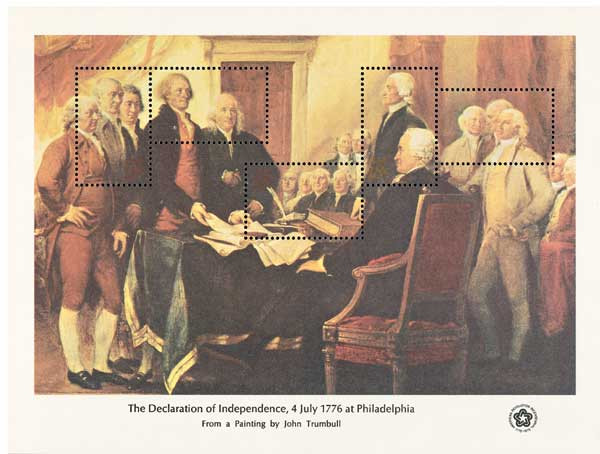
Fireworks and Freedom: Celebrating the Birth of a Nation on July 4, 1776!
The American Revolution marked a pivotal moment in history, particularly the legal separation of the thirteen colonies from Great Britain. This separation was officially recognized on July 2, 1776, when the Second Continental Congress voted for independence. The resolution was introduced by Richard Henry Lee of Virginia, declaring the colonies free from British rule.
Following this momentous vote, the Congress shifted its focus to crafting the Declaration of Independence. This document, which articulated the reasons for independence, was primarily drafted by Thomas Jefferson, with the support of the Committee of Five. Jefferson wrote the Declaration in a private home in Philadelphia over a period of 17 days, from June 11 to June 28, 1776.
After Jefferson's initial draft, Congress debated and revised it, notably removing his strong criticism of King George III regarding the slave trade. The final version of the Declaration was approved on July 4, 1776, a date that would go on to be celebrated as Independence Day.
Interestingly, John Adams foresaw the significance of July 2 as a day of celebration, predicting it would become a major anniversary festival. However, the public chose July 4, the day the Declaration was publicly adopted, as the day to commemorate independence, leading to the celebrations we know today.
Historians often debate the exact timing of the signing of the Declaration. While it is commonly believed that it was signed on July 4, most historians agree that the actual signing took place about a month later, on August 2, 1776. This discrepancy highlights the complex nature of historical events and their documentation.
A remarkable coincidence in American history is that both Thomas Jefferson and John Adams, the only signers of the Declaration who would later become presidents, both died on July 4, 1826—exactly 50 years after the Declaration was adopted. Additionally, James Monroe, another president, also passed away on this significant date in 1831. Furthermore, Calvin Coolidge, the only U.S. president born on Independence Day, was born on July 4, 1872.
For stamp collectors, the significance of July 4 extends beyond mere historical events. The issuance of commemorative stamps, such as those celebrating the Declaration of Independence or featuring the Founding Fathers, offers a tangible connection to this pivotal moment in American history. Collecting such stamps not only enriches your collection but also serves as a reminder of the values and ideals that shaped the nation.
To learn more about the history behind Independence Day, visit this website.