

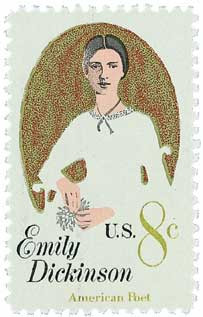
Emily Dickinson: A Brief Overview
Emily Elizabeth Dickinson (December 10, 1830 – May 15, 1886), a remarkable American poet, gained little recognition during her lifetime but is now celebrated as a vital figure in American poetry. Her unique perspective on life, death, and nature resonates across generations.
Born in Amherst, Massachusetts, into a prominent family, Dickinson's upbringing was rooted in a community that valued education and intellectual engagement. She spent seven years at the Amherst Academy and briefly attended the Mount Holyoke Female Seminary before returning home, where she would largely remain for the rest of her life.
Notoriously reclusive and viewed as eccentric, Dickinson had a distinctive personal style, favoring white clothing and often avoiding social interactions. Her only romantic relationships were predominantly through correspondence, underscoring her preference for solitude.
During her lifetime, Dickinson wrote nearly 1,800 poems, yet only a small fraction—ten—were published, and even these were heavily edited to conform to traditional poetic formats. Her innovative writing style included short lines, unconventional punctuation, and slant rhymes, setting her apart from her contemporaries. Themes of death, immortality, nature, and spirituality are prevalent in her work, revealing deep introspection.
Upon her death in 1886, Dickinson's sister Lavinia discovered her vast collection of poetry, leading to posthumous publications. The first collection appeared in 1890, curated by Thomas Wentworth Higginson and Mabel Loomis Todd, who significantly edited the poems. It wasn't until 1955 that a complete volume—The Poems of Emily Dickinson—was made available, allowing her true voice to emerge.
Interesting to note is that Dickinson dedicated at least eleven poems to her sister-in-law, Susan Huntington Gilbert Dickinson. However, these dedications were later censored, igniting speculation about the nature of their relationship and suggesting a possibility of romantic ties, according to various scholarly interpretations.
For stamp collectors, Dickinson’s legacy extends beyond her literary contributions. The commemorations and publications surrounding her life have inspired various stamp issues that celebrate her work and impact on American culture. Collecting such stamps can provide insight into the historical and artistic contexts of her life and the era she influenced.
Check out this YouTube video of the philatelic journey through the life of the "Belle of Amherst," exploring how the United States honored her on postage stamps.
To learn more about Emily Dickinson, you can visit the Source of this article.