

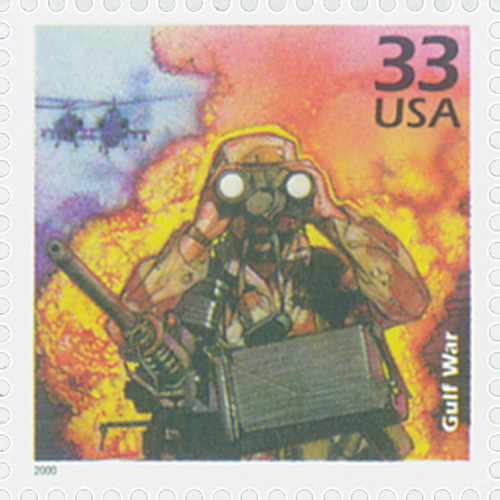
Summary of the Gulf War
The Gulf War was a significant armed conflict that took place between Iraq and a coalition of 42 countries led by the United States. This operation encompassed two main phases: Operation Desert Shield, which involved military buildup from August 1990 until January 1991, and Operation Desert Storm, which commenced with extensive bombing on January 17 and concluded with the liberation of Kuwait on February 28, 1991.
On August 2, 1990, Iraq, under the leadership of Saddam Hussein, invaded Kuwait. The invasion was motivated by accusations against Kuwait for drilling in Iraq's Rumaila oil field and Iraq's substantial debt from the Iran–Iraq War. Following the invasion, Iraq quickly occupied Kuwait and established a puppet government, while splitting the country's territory.
The international community reacted swiftly to the invasion, with the UN Security Council condemning Iraq’s actions and demanding withdrawal while imposing a total embargo on goods from both Iraq and Kuwait. This led to the formation of the largest military coalition since World War II, with significant contributions from the United States, Saudi Arabia, the United Kingdom, and Egypt.
On November 29, 1990, the UN issued an ultimatum to Iraq to withdraw by January 15, 1991. When this ultimatum was ignored, the coalition began an extensive bombing campaign against Iraq, which lasted five weeks. During this time, Iraq launched missiles towards Israel and Saudi Arabia but did not achieve its aim of provoking a wider conflict.
On February 24, 1991, following a series of aerial strikes, coalition forces launched a ground assault that swiftly liberated Kuwait. The ground advance lasted only 100 hours, leading to a ceasefire declaration.
In the aftermath of the war, the Iraqi government quashed uprisings within the country, prompting coalition forces to establish no-fly zones above Northern and Southern Iraq. The UN also initiated efforts to monitor and eliminate Iraq's weapons of mass destruction programs.
The environmental impact of the Gulf War was substantial, with Iraqi forces causing the largest oil spill in history at that time and igniting over six hundred oil well fires. The conflict also had long-lasting effects on US veterans, notably the Gulf War syndrome, affecting over 40% of them.
The Gulf War was marked by the introduction of live news coverage from the battlefield, primarily through CNN, earning it the nickname the "Video Game War" due to the extensive visual coverage of military operations. It was characterized as the "first space war," utilizing advanced technologies such as satellite communications and GPS navigation, alongside precision-guided munitions.
For collectors focusing on commemoratives related to this important historical conflict, these events may provide inspiration for themes and designs revolving around military history and the technology used in warfare.
For more information, visit the source.