
Boom! The Day the World Changed: July 16, 1945
The Trinity test marked a pivotal moment in history as it was the first successful detonation of a nuclear weapon. Conducted by the United States Army at 5:29 a.m. Mountain War Time on July 16, 1945, this test was a significant part of the Manhattan Project, aimed at developing atomic bombs during World War II.
The bomb tested was an implosion-design plutonium bomb, referred to as the "gadget." This design was similar to the Fat Man bomb that would later be used on Nagasaki, Japan, just weeks later on August 9, 1945. The test was driven by concerns regarding the bomb’s complexity and reliability.
J. Robert Oppenheimer, the director of the Los Alamos Laboratory, assigned the code name "Trinity" to the test, drawing inspiration possibly from the works of poet John Donne. The test was managed by Kenneth Bainbridge and took place in the Jornada del Muerto desert, approximately 35 miles southeast of Socorro, New Mexico, on what was then the Alamogordo Bombing and Gunnery Range.
In preparation, fears of a potential failure led to the construction of a steel containment vessel known as "Jumbo". However, it ultimately was not utilized during the test. A rehearsal on May 7, 1945, involved the detonation of a significant amount of high explosives to simulate conditions.
On the day of the test, around 425 observers were present, including prominent scientists like Enrico Fermi, Richard Feynman, and Edward Teller. The explosion released energy equivalent to 25 kilotons of TNT, generating a massive cloud of fallout. Notably, the test was conducted without evacuating local residents, which would later be deemed unsafe by postwar radiation safety guidelines.
In recognition of its historical significance, the Trinity test site was designated a National Historic Landmark district in 1965 and was added to the National Register of Historic Places the following year.
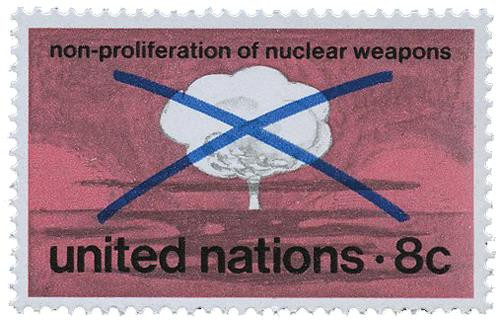
This event is of particular interest to stamp collectors, as commemorative stamps often feature significant historical events. The Trinity test not only represents a monumental scientific achievement but also a pivotal moment in international relations and military history. Collectors may find stamps relating to the atomic age, the Manhattan Project, or events surrounding World War II valuable additions to their collections.
For more detailed information, visit this website.