
The New Deal: Key Takeaways
The New Deal (1933-1938) was a series of reforms initiated under President Franklin D. Roosevelt to combat the Great Depression in the United States. Aimed at addressing economic, social, and political crises, the New Deal is significant for its lasting impact on American society and governance.
Here are some key takeaways:
- Introduction of Government Intervention: Roosevelt's policies marked a shift from minimal government interference to significant public involvement in the economy. This change was grounded in the belief that inherent market problems required a proactive governmental approach.
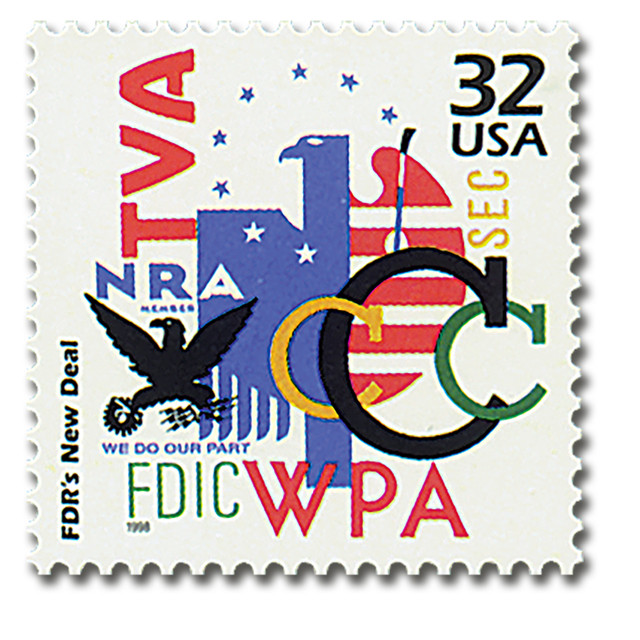
- First New Deal (1933-1935): Focused on the "3 R's" - Relief, Recovery, and Reform. Notable measures included the Emergency Banking Act and the Federal Deposit Insurance Corporation (FDIC) to restore financial confidence.
- Job Creation Programs: Initiatives like the CCC (Civilian Conservation Corps) and TVA (Tennessee Valley Authority) were instrumental in providing jobs and fostering economic development, particularly for young men and in rural areas.
- Second New Deal (1935-1938): Expanded on the First New Deal with emphasis on job creation and welfare programs, leading to the establishment of the WPA (Works Progress Administration), the National Labor Relations Act, and the Social Security Act, which introduced pensions and benefits for various social groups.
- Political Realignment: The New Deal reshaped the political landscape of the United States, creating a coalition that included labor unions, racial minorities, and intellectuals, influencing Democratic Party dynamics for decades.
- Legislative Challenges: The momentum of the New Deal faced hurdles in 1938 with restrictions from a more conservative Congress and some legislative measures being overturned by the Supreme Court, demonstrating the contentious nature of Roosevelt's reforms.
For readers interested in collecting stamps, the era of the New Deal is significant as it represents a transitional period in U.S. history, capturing the sociopolitical sentiments that influenced philately during the 1930s. Collecting stamps from this era can offer insights into the visual narrative of recovery and change in American society.
For more information, please refer to this website.
Phenom Stores LLC is an affiliate partner for eBay.com and receives a commission on all purchases made through eBay.com.