

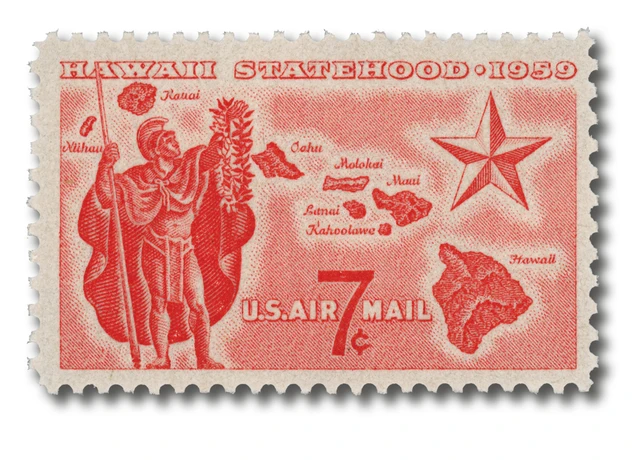
Aloha, 50th State: Celebrating Hawaii's Historic Admission on August 21, 1959!
Hawaii is a unique island state of the United States, situated in the central Pacific Ocean, approximately 2,000 miles southwest of the U.S. mainland. Notably, it is the only U.S. state composed entirely of an archipelago, consisting of 137 volcanic islands, with the eight main islands being Niʻihau, Kauaʻi, Oʻahu, Molokaʻi, Lānaʻi, Kahoʻolawe, Maui, and Hawaiʻi (commonly referred to as the "Big Island"). Hawaii's diverse geography contributes to its fourth-longest ocean coastline in the U.S., at about 750 miles.
As a melting pot of cultures, Hawaii is characterized by its demographic diversity, being home to a significant Asian American plurality and the largest proportion of multiracial individuals in the country. The state has a rich history dating back to Polynesian settlement around 1000-1200 CE, followed by British exploration in the late 18th century and the establishment of a unified kingdom in 1810. However, the Hawaiian monarchy was overthrown in 1893, leading to annexation by the U.S. in 1898.
Hawaii gained strategic importance during World War II, particularly following the Japanese attack on Pearl Harbor on December 7, 1941. It officially became the 50th state of the U.S. on August 21, 1959. In 1993, the U.S. government issued an apology for its role in the overthrow of Hawaii's government, which has spurred ongoing discussions around sovereignty and redress for the indigenous population.
Economically, Hawaii transitioned from a plantation-based economy in the late 19th century to a more diversified economy, where tourism and military defense are now the dominant sectors. The state's stunning natural beauty, tropical climate, and public beaches attract millions of tourists each year, making it a popular destination for travelers and stamp collectors alike.
However, Hawaii faces challenges due to climate change, including rising sea levels, drought, and wildfires, which pose risks to its tourism industry. The state's isolation contributes to a high cost of living, but it remains one of the wealthiest states in the U.S., with residents enjoying the highest life expectancy in the nation at 80.7 years.
For stamp collectors, Hawaii offers a unique opportunity to explore historical and cultural themes through its postage stamps, reflecting its rich heritage and diverse influences.
For more detailed information, you can visit this website.