

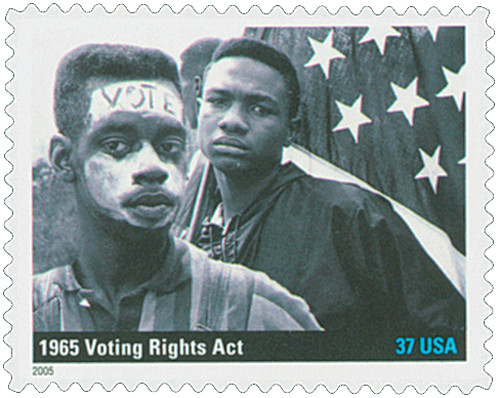
A Pivotal Moment: Celebrating the Voting Rights Act's Birth on August 6, 1965!
The Voting Rights Act of 1965 is a crucial piece of U.S. legislation aimed at eliminating racial discrimination in voting. Signed into law by President Lyndon B. Johnson amid the civil rights movement, the act sought to protect the voting rights guaranteed by the Fourteenth and Fifteenth Amendments, particularly for racial minorities in the South.
Considered one of the most effective federal civil rights laws, the Act has been amended multiple times to enhance its protective measures. Its "general provisions" offer nationwide voting rights protections, while Section 2 specifically prohibits discriminatory practices based on race or language minority status. The act also abolished literacy tests that historically disenfranchised minorities.
Special provisions apply to jurisdictions with a history of racial discrimination. For instance, the Section 5 preclearance requirement mandated that certain regions receive approval from the U.S. attorney general or a federal court before making any changes to voting laws.
However, recent rulings from the Roberts Court have significantly weakened the Act. The 2013 Shelby County v. Holder decision nullified the preclearance requirement, leading to various restrictive voting measures in previously covered jurisdictions. This resulted in a notable decline in African American voter turnout.
Additionally, the Brnovich v. Democratic National Committee case in 2021 further diminished Section 2's effectiveness, while the upcoming Louisiana v. Callais case is expected to impose stricter requirements on claims of vote dilution.
Research indicates that the Voting Rights Act has significantly boosted voter registration and turnout, particularly among Black populations. Furthermore, it has been linked to improved public services in areas with higher Black demographics and increased representation in Congress for civil rights.
In summary, the Voting Rights Act of 1965 not only marked a significant legislative achievement but also established a framework for ensuring equitable voting rights. Its ongoing struggles highlight the importance of vigilance in protecting these rights.
For more detailed information, visit this website.